
Real Hair Transplant Results in Lahore: Patient Case Studies by Prof. Dr. Azim Jahangir Khan
When people search for the best hair transplant surgeon in Lahore, most of them want to see real results first, not just promises. This page walks through the different types of hair transplant cases handled by Prof. Dr. Azim Jahangir Khan and his team at Institute Cosmetique, what each case involves, and what results to expect.
Types of Hair Transplant Cases Handled at Institute Cosmetique
Not every hair transplant case is the same. Here are the main types of cases treated:
- Crown Hair Transplant — for patients with a thinning or bald crown, which needs a different graft pattern since crown hair grows outward from a center point.
- Frontal Hairline / Dense Packing — for patients wanting a fuller, denser look at the front hairline, where more grafts are packed closer together.
- FUT Cases — for patients needing a larger number of grafts, where a thin strip of hair is taken from the back of the head and divided into grafts.
- FUE Cases — for patients wanting a scarless approach, where individual hair follicles are picked out one at a time.
- Eyebrow Transplant — for patients with thin or patchy eyebrows, using the same graft technique on a much smaller scale.
- Body Hair Transplant — for patients with limited scalp donor hair, where hair from the chest, beard, or other body areas is used instead.
Each case is checked by the surgeon first, since the right technique depends on the size of the bald area, the patient’s donor hair supply, and the look the patient wants.
FUT vs FUE: The Two Main Techniques
FUT | FUE | |
How it works | A strip of skin with hair is removed from the back of the head, then cut into small grafts | Hair follicles are picked out one by one from the back of the head |
Scar | One thin line scar (hidden under hair) | Tiny dot scars spread across the area |
Best for | Large bald areas needing many grafts | Frontal hairline, beard, and eyebrow transplants |
Recovery | Slightly longer | Usually faster |
FUT (Follicular Unit Transplant): The surgeon takes out a thin strip of healthy hair from the back of the head — this is called the donor area — then splits it into small grafts of one to four hairs each. These grafts are placed in the bald areas at the top and front of the head.
FUE (Follicular Unit Extraction): Instead of removing a strip, single hair follicles are picked out one at a time from the back of the head. This gives the surgeon more control over which hairs to pick, and is commonly used for the front hairline, beard, and eyebrows.
Who Gets Hair Transplants?
Most patients are men, but women make up a good number too — around 30% of all patients. For women, both FUT and FUE are used to add more hair between the hair that’s already there, since female hair loss is usually thinning, not full baldness.
Before & After: Real Patient Results
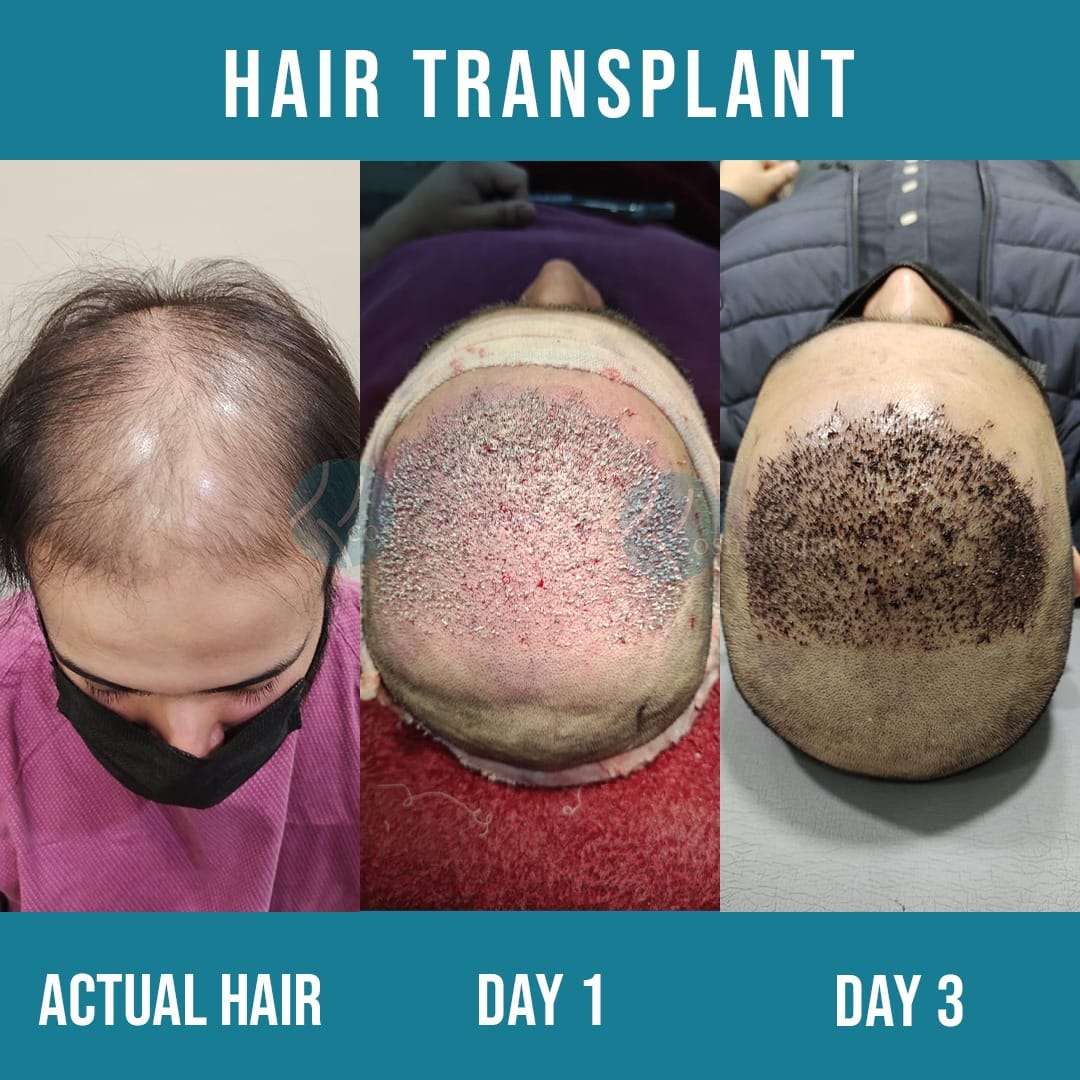
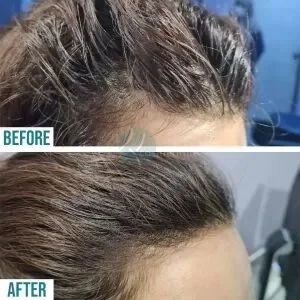
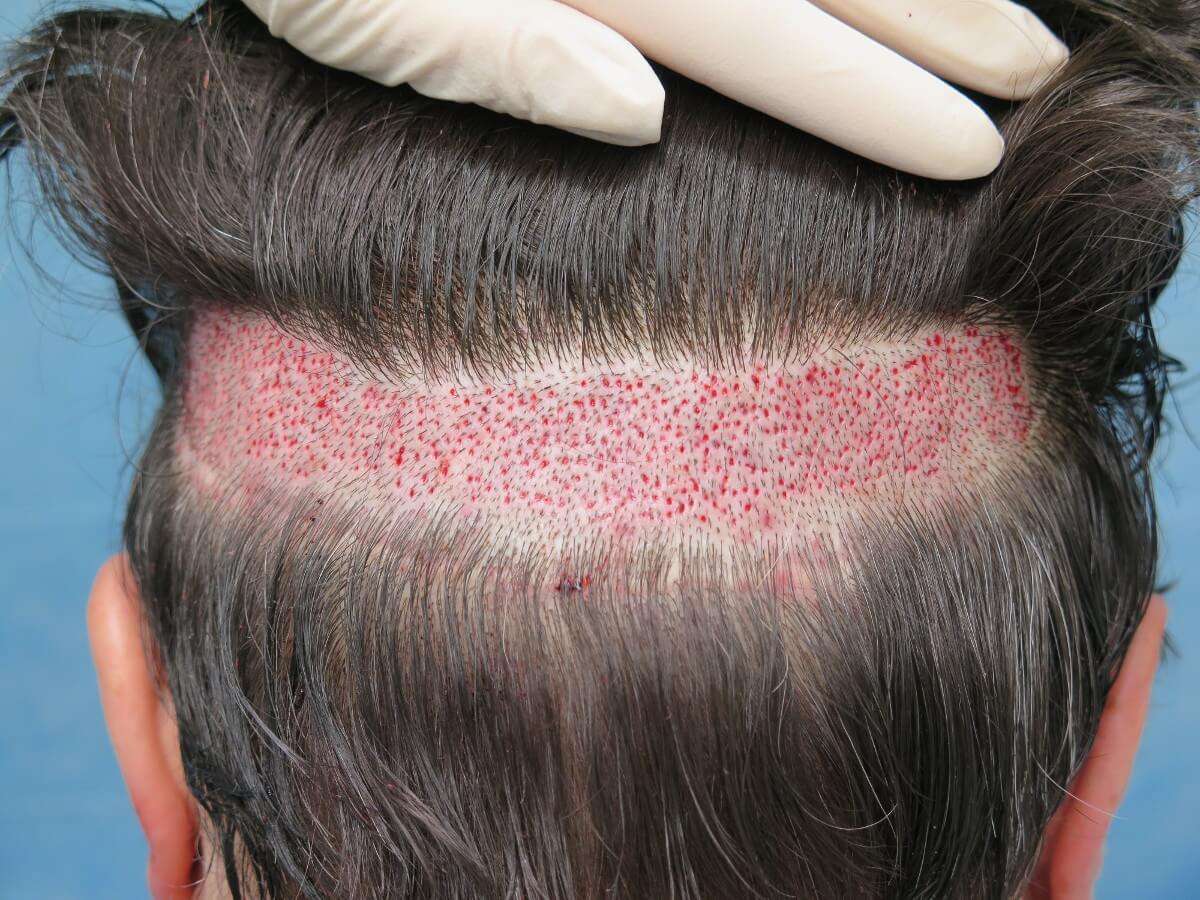
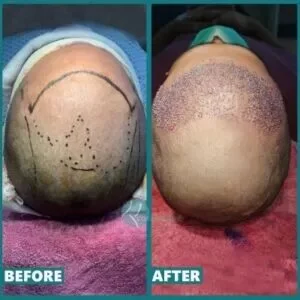
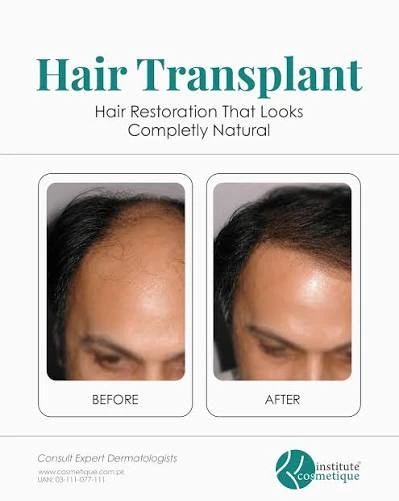
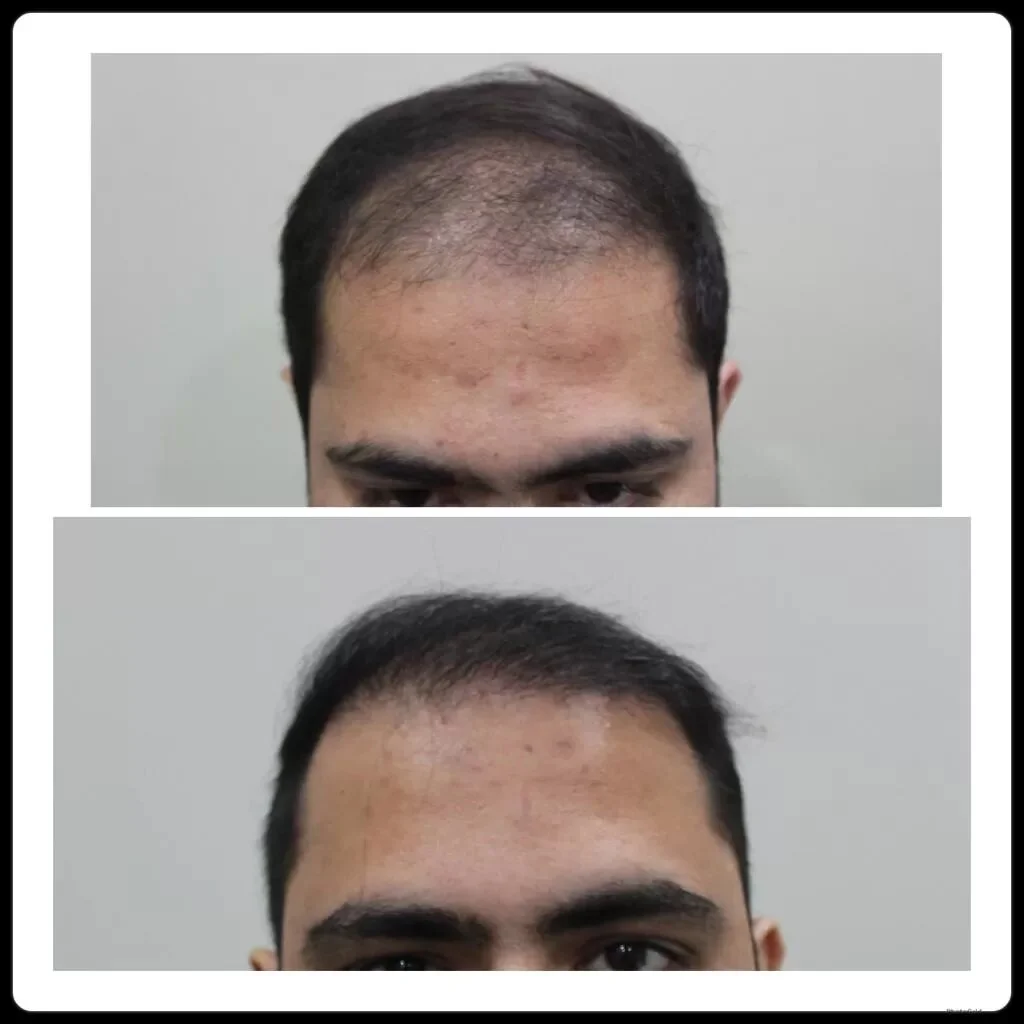
Photos say more about a surgeon’s skill than any promise can. Below are real before-and-after results from patients treated at Institute Cosmetique — a receding hairline that has been redesigned to sit naturally, a thinning crown that has filled back in, and other cases handled by the team.
Frontal Hairline Cases: Before — a thin or uneven hairline. After — full growth, shaped to match the patient’s face naturally.
Crown Coverage Cases: Before — a thin or bare crown. After — filled in with healthy, natural-looking density.
Who Performed These Cases: Meet the Surgeons
Prof. Dr. Azim Jahangir Khan holds qualifications in Internal Medicine and Dermatology. He spent over 15 years training, teaching, and working as a dermatologic and cosmetic surgeon in the United States before coming back to Pakistan. He has written textbook chapters on hair loss that are taught in Pakistani and international medical colleges, and he is the only professor in Pakistan currently teaching hair transplant surgery to young doctors at Allama Iqbal Medical College and Jinnah Hospital, Lahore. Institute Cosmetique has treated more than 100,000 patients in total, across its three clinics in Lahore — DHA, MM Alam Road, and Johar Town — and holds a 4.9-star rating from patients on Google.
Dr. Saima Malik has been a Consultant Dermatologist at Institute Cosmetique since 2013, after graduating from King Edward Medical College, Lahore, in 2003. She trained further in the UK, earning a Diploma in Dermatology and an M.Sc. in Dermatology from Cardiff University, and is a Fellow of the American Society for Dermatologic Surgery. Over her 12+ years at Institute Cosmetique, working under the mentorship of Prof. Dr. Azim Jahangir Khan, she has performed thousands of laser and aesthetic dermatology procedures. She is proficient in FUE, and is known for designing natural-looking hairlines for both men and women, with close attention to graft survival and follow-up care.
Common Questions About These Cases
Yes, and this is completely normal. The transplanted hair sheds within 2 to 6 weeks after surgery. This shedding is what makes room for new hair to grow from the same follicles.
It depends on how big the bald area is. Most patients need 2 to 3 sessions, and the surgeon decides the exact number after checking medical history and scalp condition.
New hair starts to show around 3 to 5 months. Most patients see a clear, visible change by 6 to 9 months, and full results can take up to 12 months.
7 to 10 days of rest is recommended so the grafts can settle. Normal daily life can start again after 14 days.
Yes, traveling by plane, car, or bus is safe right after surgery. Long walks aren’t recommended at first, since sweating can affect the healing grafts.
Prices at Institute Cosmetique start from Rs. 80,000. The final cost depends on which surgeon does the surgery, which technique is used (FUT, FUE, or PRP), and how large the treatment area is. The price covers the surgeon’s fee, assistant doctors, medicines, and the operation theatre. Patients are asked to send photos from the top, front, back, and sides for an exact estimate.
No honest surgeon can promise an exact result. What a good surgeon can promise is a fair evaluation, a natural-looking hairline, and careful use of the limited donor hair — and with that approach, results are usually very good.
Why These Results Come From Institute Cosmetique
Cosmetic surgery in Pakistan has no strict rules on who can perform it, so the same surgery can be done by anyone from an untrained wig-maker to a fully qualified surgeon. At Institute Cosmetique, every case shown above was handled by trained, qualified surgeons, using the same equipment standards followed in US clinics, with three clinic locations across Lahore — DHA, MM Alam Road, and Johar Town — for easy access.