
FUT Hair Transplant: A Complete Guide
Hair loss is one of the most common concerns that brings patients to a hair restoration clinic, and choosing the right surgical technique is just as important as choosing the right surgeon. While Follicular Unit Extraction (FUE) has become the more popular choice in recent years, Follicular Unit Transplantation (FUT), also known as the strip method, remains a proven and effective option for many patients. At Institute Cosmetique in Lahore, led by Prof. Dr. Azim Jahangir Khan, patients are guided through a thorough evaluation to determine whether FUT, FUE, or a combination approach is best suited to their hair restoration goals.
What Is FUT Hair Transplant?
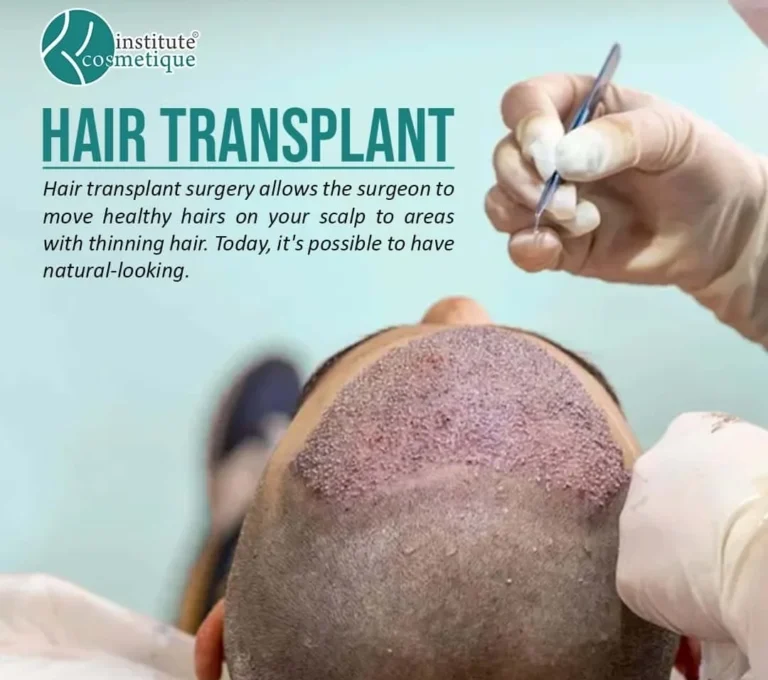
FUT is one of the oldest and most extensively studied hair transplant techniques. Instead of extracting individual follicles one by one, the surgeon removes a thin strip of scalp, usually from the back of the head where hair growth is naturally denser and more resistant to balding. This strip is then divided under magnification into hundreds or thousands of individual follicular units, each containing one to four hairs, which are carefully implanted into the thinning or balding areas of the scalp.
Because the donor strip is dissected under a microscope by trained technicians, follicular units tend to remain intact and well-preserved during the process, which can translate into strong graft survival and natural-looking results when performed by an experienced surgical team.
How the FUT Procedure Works
A typical FUT hair transplant at Institute Cosmetique follows a structured, step-by-step process:
1. Consultation and Planning
The surgeon examines the pattern of hair loss, scalp elasticity, and donor area density to confirm that FUT is a suitable technique for the patient’s specific case.
2. Local Anesthesia
The donor and recipient areas are numbed with local anesthesia, so the procedure itself is largely painless.
3. Strip Harvesting
A narrow strip of scalp, typically measuring a centimetre or so in width, is carefully removed from the donor area at the back of the head.
4. Microscopic Dissection
The strip is divided into individual follicular units using specialised microscopes, preserving as many healthy grafts as possible.
5. Recipient Site Creation
Tiny incisions are made in the balding or thinning areas, following a natural hair growth direction and angle.
6. Graft Placement
Each follicular unit is placed into the prepared incisions to recreate a natural-looking hairline and density.
7. Donor Site Closure
The donor area is closed with sutures, leaving a fine linear scar that is generally well concealed by the surrounding hair.
Advantages of FUT
FUT continues to be recommended in certain cases because of a few distinct benefits:
- Higher graft yield in a single session — FUT can often provide a larger number of grafts in one sitting, which makes it a practical option for patients with extensive hair loss.
- Efficient use of donor supply — because the strip is harvested from a concentrated area, the surrounding donor zone is left undisturbed for future sessions if needed.
- Well-established technique — FUT has been performed for decades, with a long track record of predictable, natural results in the hands of an experienced surgeon.
- Useful for limited donor density — in patients where the donor area has less
What to Expect During Recovery
Recovery after a FUT procedure generally takes a little longer than FUE because of the sutured donor site. Patients can typically expect:
- Mild tightness or discomfort at the donor area for the first several days
- Sutures that are usually removed within one to two weeks
- A thin linear scar at the donor site, which fades over time and is easily hidden by surrounding hair
- Visible new growth beginning within a few months, with fuller results developing over the following year
Following the surgeon’s post-operative instructions closely, including how to care for the donor area and when it is safe to resume normal activities, plays a significant role in achieving smooth healing and optimal results.
Is FUT the Right Choice for You?
Not every patient is the same, and this is exactly why an in-person consultation matters. Some patients with extensive hair loss and a strong need for maximum graft numbers in one session may be better candidates for FUT, while others may be steered toward FUE or a combination approach depending on scalp laxity, lifestyle, and hairstyle preferences. This is where the experience of the surgical team becomes critical.
Why Choose Institute Cosmetique for FUT in Lahore
When it comes to selecting the best hair transplant surgeon in Lahore, experience and precision make all the difference. Institute Cosmetique is led by Prof. Dr. Azim Jahangir Khan, a surgeon with over three decades of experience in hair restoration, working alongside a dedicated team that includes Dr. Amnah M. Raj and Dr. Saima Malik.
Dr. Saima Malik brings her own strong credentials to the team, having completed her MBBS from King Edward Medical College, Lahore, and going on to earn a Diploma in Dermatology along with an M.Sc. in Dermatology from Cardiff University in the UK. She is a Fellow of the American Society for Dermatologic Surgery and has trained directly under Prof. Dr. Azim Jahangir Khan, with particular expertise in natural hairline design.
This combination of surgical experience, dermatological expertise, and a patient-first approach to planning each procedure is what continues to make Institute Cosmetique a trusted name for hair transplant surgery in Lahore. Whether a patient is exploring FUT, FUE, or trying to understand which technique fits their hair loss pattern, the team at Institute Cosmetique offers a thorough consultation to map out a realistic, personalised treatment plan.